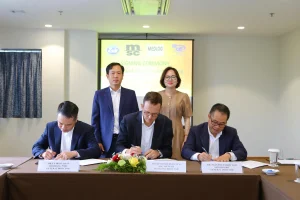
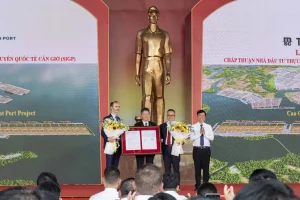
On the morning of April 29, 2026, the official ceremony to present the investor approval decision for the Can Gio International Transshipment Port (SIGP) project took place as part of Ho Chi Minh City’s launch of major infrastructure projects, marking the 51st anniversary of the Liberation of Southern Vietnam and National Reunification (April 30, 1975 – April 30, 2026).
Held alongside the groundbreaking ceremony for the renovation and refurbishment of the Ho Chi Minh Museum, Ho Chi Minh City Branch, the event carried special significance. At the historic Dragon House, the city’s rich heritage was brought together with its ambitions for modern infrastructure and long-term development.

A strategic milestone towards a world-class transshipment hub
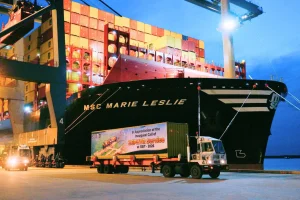
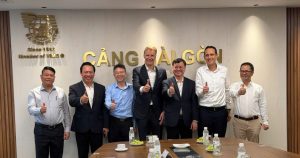
The Can Gio International Transshipment Port project has been entrusted to a consortium comprising Vietnam Maritime Corporation (VIMC), Saigon Port Joint Stock Company (Saigon Port) and international strategic partner MSC/TiL.
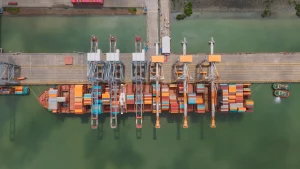
With an estimated total investment of VND 128 trillion (approximately USD 5 billion), the project will cover around 571 hectares. Designed to accommodate ultra-large container vessels of up to 250,000 DWT (24,000 TEU), the port is expected to achieve an annual handling capacity of nearly 17 million TEU upon full development.

The formal approval of the investor consortium marks more than the beginning of a major port infrastructure project. It represents a significant step forward in Ho Chi Minh City’s broader strategy to expand its maritime and logistics capabilities.
Saigon Port: Building on a legacy to shape a modern port ecosystem
As a key member of the consortium, Saigon Port plays a distinctive role in bridging its long-established port operations with the development of a modern, integrated maritime ecosystem.
With more than a century of history, Saigon Port has witnessed the evolution of Ho Chi Minh City’s international trade and remains a major player in Southern Vietnam’s port industry. Building on its traditional strengths in cargo handling and terminal operations, the company is steadily repositioning itself within an increasingly interconnected port network, where value is driven not only by cargo throughput but also by connectivity, supply chain integration and the efficient movement of goods.
Speaking at the ceremony, a Saigon Port representative emphasized that receiving the investor approval decision was not simply a recognition of the extensive preparations undertaken, but also a reflection of the “historic responsibility and trust” placed by the Government and Ho Chi Minh City in the maritime professionals entrusted with delivering the project.
Strengthening Vietnam’s position in global logistics
The Can Gio International Transshipment Port is expected to be a major catalyst for Vietnam’s logistics competitiveness as global trade continues to expand. Its strategic location near key international shipping lanes offers favorable conditions for the development of a regional transshipment hub, helping reduce reliance on intermediate ports elsewhere in the region.
Once operational, the port is expected not only to increase cargo handling capacity but also to attract more direct shipping services, strengthening Vietnam’s role in international trade networks. The project will also support Ho Chi Minh City’s long-term ambition to become a leading regional hub for logistics and maritime economic activities.

A bsiness perspective: Driving growth and global integration
Addressing the ceremony, Mr. Nguyen Le Chon Tam, General Director of Saigon Port, highlighted the growing importance of investing in large-scale transshipment ports amid the continued expansion of global trade.
For Ho Chi Minh City, he noted, modern seaport and logistics infrastructure is essential to achieving strong, sustainable economic growth, enhancing competitiveness and deepening integration into international supply chains.

The Can Gio project therefore extends beyond a major infrastructure investment. It represents a strategic initiative to strengthen Vietnam’s long-term maritime capabilities. Mr. Tam reaffirmed that the consortium brings together experienced and financially capable partners with proven expertise in developing and operating large-scale, technically sophisticated port facilities.
A shared commitment: Partnership,responsibility and long-term vision
Drawing on their combined strengths and expertise, the consortium members have agreed to work closely throughout project implementation, mobilizing financial, technological and management resources to ensure timely delivery, construction quality and overall project effectiveness.
The adoption of advanced port operating standards, together with access to established global shipping networks, will be instrumental in developing Can Gio into a modern and competitive regional transshipment hub.
Beyond the operation of a standalone port facility, the consortium envisions Can Gio as a vital link in international supply chains, reinforcing the position of both Ho Chi Minh City and Vietnam within the global logistics network.
This long-term commitment is closely aligned with sustainable development principles, seeking to balance economic growth, environmental protection and lasting benefits for local communities.

The decision marks more than the launch of a new port development. It opens a new chapter of opportunity for Vietnam’s maritime industry and for Saigon Port itself, as the company builds on its proud heritage and sets its sights on a greater role in global maritime trade.
Thai Vuong Nhi
Photos: NHD.